
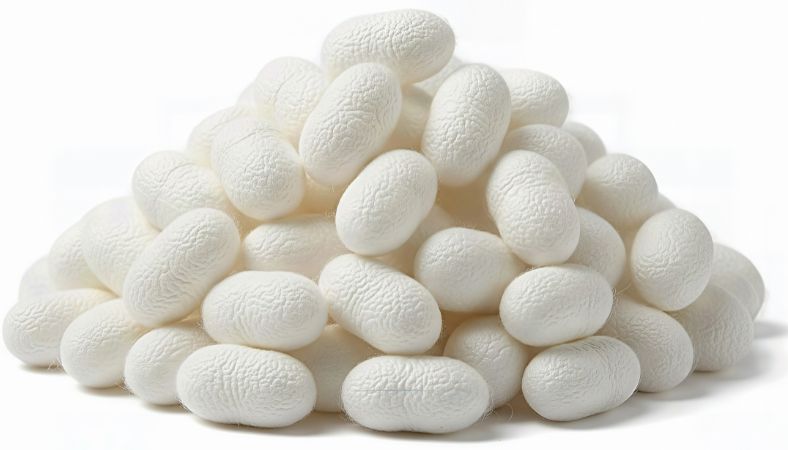
In the vast landscape of biomedical research, the search for molecules capable of protecting cells from environmental and physiological insults is constant. Among natural substances attracting increasing interest, sericin stands out for its surprisingly versatile biological activity profile. Far from being a mere by-product of silk processing, this protein proves to be a powerful ally in supporting cellular vitality by counteracting two of the main enemies of tissue homeostasis: oxidative stress and mechanical damage. Its properties offer intriguing prospects in dermatology, regenerative medicine, and even cryopreservation technologies.
A stronghold against oxidative stress
One of the most well-documented roles of sericin is its ability to act as an effective scavenger of reactive oxygen species (ROS). Oxidative stress—caused by an excess of free radicals, such as those induced by UV radiation, pollution, or inflammatory processes—is a major driver of cellular aging and numerous diseases. Sericin counteracts this phenomenon through both direct and indirect mechanisms.
Studies have shown that treatment with sericin can significantly reduce intracellular ROS levels in cells exposed to stress sources such as hydrogen peroxide (H?O?) or UVA radiation. In experiments involving human keratinocytes and melanocytes, the protein protected cells from UVA-induced cytotoxicity by preserving the integrity of the mitochondrial membrane potential, a key parameter for cellular survival and energy metabolism. This protection translates into increased cellular viability even under severe stress conditions, as demonstrated in dermal fibroblasts and liver cells.
Its effectiveness has led to investigation in complex pathological contexts such as intervertebral disc degeneration, a condition characterized by inflammation and oxidative stress. In this field, sericin has been used as a key component of nanoparticles designed to protect nucleus pulposus cells, demonstrating strong ROS-scavenging properties and opening the way to potential regenerative therapies.
Molecular mechanisms and activation of cellular defenses
Sericin’s action is not limited to the simple chemical neutralization of free radicals. It can interact with cellular signaling mechanisms, strengthening endogenous antioxidant defenses. Proteomic studies have revealed that exposure to sericin alters the expression of key proteins involved in stress response, inflammatory processes, and cell survival.
In particular, sericin stimulates the activity of essential antioxidant enzymes such as catalase and superoxide dismutase (SOD). In studies on cryopreserved ovarian tissue, the addition of sericin increased levels of glutathione (GSH) and total antioxidant capacity (T-AOC), while simultaneously reducing markers of oxidative damage such as malondialdehyde (MDA) and nitric oxide (NO). This enhancement of the cell’s intrinsic defense system is mediated by activation of crucial survival signaling pathways, including the PI3K/AKT/mTOR pathway, which plays a central role in regulating metabolism, growth, and apoptosis.
Protection from mechanical stress and preservation of tissue integrity
Beyond chemical defense, sericin also plays an important role in protecting tissues from mechanical stress. This function is particularly evident in tissues subjected to continuous physical stimuli. For example, in formulations studied for intervertebral disc regeneration, sericin has shown high anti-elastase activity. By inhibiting elastase—an enzyme that degrades elastin—sericin helps preserve the integrity of the extracellular matrix and the elasticity of tissues, counteracting degenerative processes caused by abnormal mechanical load.
In the context of cryopreservation, sericin also provides protection against mechanical damage. Cells and tissues subjected to freezing endure significant physical stress due to the formation of ice crystals. Acting as a cryoprotectant, sericin helps maintain cellular morphology and reduce apoptosis, demonstrating its ability to preserve the structural integrity of tissues even under extreme conditions.
Versatility of action and future perspectives
One of the most fascinating aspects of sericin is its versatility. Depending on the biological context, it can modulate cellular responses in a targeted manner. While it protects healthy cells from oxidative stress, studies have also shown that it can selectively induce pro-oxidative stress in tumor cells, leading to apoptosis and suggesting a potential anticancer role. This dual action—cytoprotective for healthy tissues and cytotoxic for diseased ones—is currently the subject of extensive investigation.
Furthermore, research is exploring its use in combination with other bioactive molecules to enhance its effects. The development of fusion proteins, such as sericin combined with cecropin B, has demonstrated increased protection against UVB and H?O?-induced damage in fibroblasts. These findings suggest that the development of sericin-based biomaterials could lead to increasingly effective therapies for skin disorders and beyond.
Conclusion
Sericin emerges as a powerful and multifaceted cellular antistress agent. Its ability to protect tissues from both the chemical aggression of free radicals and physical stress, combined with its excellent biocompatibility, makes it an ideal candidate for a wide range of applications—from anti-aging cosmeceuticals to regenerative medicine—offering a valuable tool for preserving tissue health and functionality.
