
Modern surgery is constantly evolving towards techniques that are increasingly less invasive and more respectful of tissue integrity. Surgical bioadhesives represent one of the most promising innovations for overcoming the intrinsic limitations of traditional sutures with threads and staples. These materials offer the possibility of a homogeneous distribution of forces along the wound line, reduce operating times, and can guarantee an hermetic seal that is fundamental for preventing the loss of biological fluids. Currently available products, however, present non-negligible criticalities: cyanoacrylates, while ensuring immediate adhesion, can generate toxic by-products during degradation, whereas fibrin glues, excellent from a biocompatibility standpoint, often offer insufficient mechanical resistance for demanding applications. It is within this research space, in the search for the ideal material, that sericin is establishing itself as a candidate of exceptional scientific interest.
Sericin and its intrinsic properties
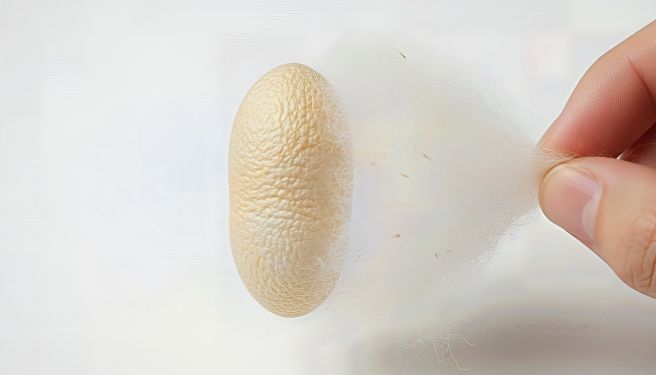
Sericin, as we know, is a natural glycoprotein that in the silkworm cocoon performs the function of an amorphous cement, enveloping and holding together the two fibroin filaments. Its molecular structure, characterized by an abundance of polar amino acids such as serine, aspartic acid, and threonine, makes it extremely hydrophilic and chemically reactive, endowed with a natural tendency to adhere to protein surfaces. Today we are aware of the fact that this adhesive capacity, perfected by evolution to ensure the structural integrity of the cocoon, can be engineered to promote adhesion to various biological substrates, such as connective tissues rich in collagen. Added to this property are excellent biocompatibility, once appropriately purified, and a biodegradability that makes it metabolizable by the body into simple amino acids. This protein also possesses a marked biological activity, demonstrating the ability to promote the proliferation of fibroblasts and keratinocytes, exert an antioxidant action, and maintain a humid microenvironment ideal for reparative processes.
Crosslinking mechanisms for adhesive formation
Native sericin in aqueous solution does not possess the mechanical resistance necessary to function as a structural surgical adhesive. Its potential is fully expressed when it is engineered to transform from a liquid into a hydrogel directly at the application site. One of the most sophisticated strategies involves the functionalization of its molecules with methacrylic groups, obtaining so-called methacryloylated sericin. This solution, applied to the wound, is exposed to a light source that triggers rapid polymerization, forming a stable three-dimensional network that offers the surgeon precise control over setting times. An alternative and fascinating approach, on the other hand, draws inspiration from natural biological processes, using enzymes such as transglutaminase to catalyze the formation of cross-links between sericin molecules or between these and the proteins of the host tissue, in a mechanism reminiscent of blood coagulation. To further optimize the final properties of the material, sericin can be combined with other polymers to form interpenetrating networks, thus obtaining hydrogels with mechanical characteristics tailored to specific clinical needs.
Surgical applications and operational advantages
The use of sericin-based bioadhesives finds particularly advantageous indications in those anatomical districts where traditional suturing encounters the greatest difficulties. In pulmonary surgery, the ability to seal air leaks after a resection represents a clinical need of primary importance, and an elastic film of sericin could significantly shorten hospitalization times. In the vascular field, the possibility of repairing a laceration without penetrating the intima with a needle would reduce the risk of thrombosis, offering an invaluable advantage. The parenchymatous tissues of organs such as the liver, spleen, and kidneys are extremely friable and suture with thread tends to further lacerate them: an adhesive approach instead allows one to approach and seal the cut surfaces in an atraumatic way, effectively controlling hemorrhages and the loss of specific fluids. The transparency and flexibility of sericin ultimately make it an ideal material for delicate applications such as ophthalmic surgery or even as an adhesive scaffold in regenerative medicine, where its ability to deliver growth factors combines with the mechanical function of fixation.
