
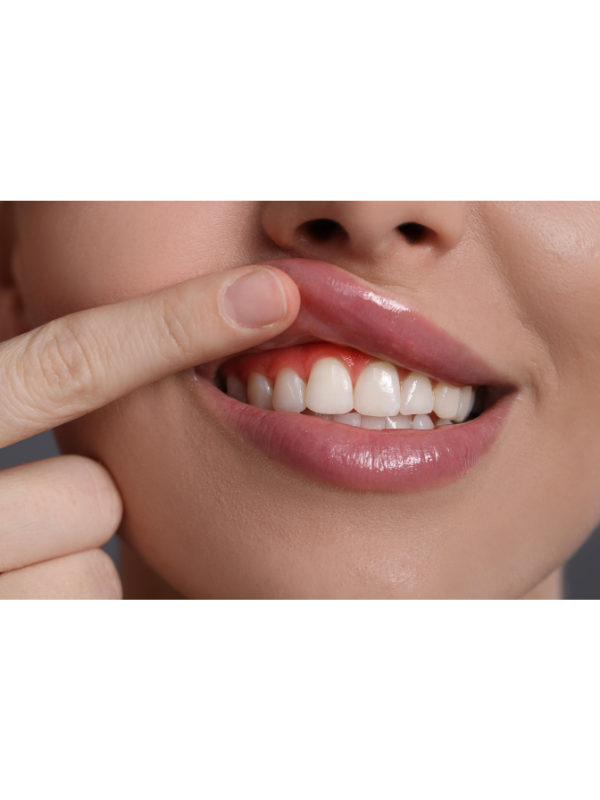
The loss of tissue around the tooth is one of those clinical problems that seem simple only until you actually try to solve them. The gum recedes, the alveolar bone resorbs, the periodontal ligament that anchors the tooth to its socket loses its organisation, and the whole supporting apparatus begins to fail according to a sequence that periodontitis knows all too well. The difficulty lies not so much in removing the inflammation or disinfecting the pocket, procedures that are by now well established, as in rebuilding what has been lost. The periodontium is not a single tissue but a composite architecture, made of bone, root cementum, ligament and gum, each with different biological and mechanical requirements, and reassembling it in the correct spatial arrangement is a challenge that tissue regeneration has been confronting for decades with mixed results. It is in this scenario that silk fibroin is carving out an increasingly interesting role, not as a laboratory curiosity but as a structural material capable of supporting real regenerative processes.
Why fibroin is of interest to dentistry
Fibroin is the structural protein of the filament produced by the silkworm, the fraction that remains once sericin has been removed, and it has long been known to medicine as a suture material. This clinical familiarity is not a secondary detail: it means we are dealing with a protein that has a long history of use in the human body, well tolerated and with a documented safety profile. What makes it particularly suited to tissue engineering, however, goes beyond biocompatibility. Fibroin possesses a combination of properties rarely found together in the same material: notable mechanical strength, surprising flexibility, a degradability that can be modulated over time, and the possibility of being processed into very different formats. From the same starting material one can obtain thin films, hydrogels, porous sponges, membranes, microspheres or nanofibrous networks, and this versatility of form is what allows it to be adapted to the complicated geometries of the oral cavity.
The environment in which a dental biomaterial has to work is anything but benign. There is constant moisture, there are intermittent mechanical loads linked to chewing, there is a high and shifting bacterial burden, there are variations in pH and temperature. A material intended to support gingival or periodontal regeneration must withstand all of this while maintaining its own integrity for the necessary length of time, and then give way to the newly formed tissue without leaving problematic residues. Fibroin achieves this balance because its degradation can be regulated by acting on its secondary structure, in particular on the content of crystalline beta sheets, which determine how rapidly the body's enzymes will be able to break the material down. A membrane designed to last a few months and one meant to support a longer process can both originate from the same protein, simply by changing the way it is treated.
Gingival regeneration and the challenge of soft tissues
The soft tissues that surround the tooth perform a function that is both aesthetic and biological. The gum seals the space between the tooth and the oral environment, protects the deeper structures from bacterial aggression, and contributes in a far from negligible way to the appearance of the smile. When it recedes, it exposes the root, increases sensitivity, encourages further infiltration and creates that elongated profile of the teeth that patients immediately perceive as a sign of ageing or disease. Rebuilding this tissue in a predictable way is difficult, because healthy gum has its own precise architecture, with a keratinised epithelium on the surface and an underlying connective tissue rich in fibroblasts and well-oriented collagen fibres.
Fibroin-based scaffolds offer gingival fibroblasts a three-dimensional environment on which to adhere, proliferate and organise. The porosity of the material guides cellular infiltration and the formation of a new vascular network, an indispensable condition for any newly formed tissue to survive. Various experimental studies have shown that periodontal fibroblasts cultured on fibroin substrates retain their viability and maintain the production of extracellular matrix, a sign that the material does not merely act as an inert scaffold but communicates with the cells in a favourable way. The possibility of producing very thin and transparent fibroin films, moreover, opens interesting prospects for applications in which a delicate support is needed over an exposed surface, such as the coverage of a root left bare by recession.
An often underestimated aspect of oral soft tissue regeneration is the need to control the speed at which the epithelium proliferates. In periodontal defects, in fact, the epithelium tends to grow faster than the other tissues and risks occupying the space that should be filled by bone and ligament, compromising correct regeneration. Fibroin membranes can be designed precisely to modulate this dynamic, behaving as selective barriers that favour the right tissues in the right places, a principle that leads us directly to the heart of guided periodontal regeneration.
Fibroin membranes and guided periodontal regeneration
Guided periodontal regeneration is based on a conceptually elegant idea: to interpose a membrane between the gingival flap and the root surface so as to prevent the epithelial cells, which are too fast, from invading the defect, leaving instead the time for the cells of the periodontal ligament and the bone to repopulate the space and rebuild the attachment. The success of this technique depends to a large extent on the quality of the membrane, which must stay in place, maintain the space, integrate with the surrounding tissues and then degrade within times compatible with healing. The membranes historically used have shown precise limitations: the non-resorbable ones require a second operation to be removed, while many of the resorbable ones tend to collapse or degrade too quickly, losing the ability to maintain the space at the most delicate moment.
Here fibroin displays some of its most convincing advantages. Its mechanical strength allows it to maintain the space of the defect without collapsing under the pressure of the flap, while its adjustable degradability makes it possible to synchronise the disappearance of the membrane with the real timing of regeneration, avoiding both premature dissolution and excessive persistence. Electrospun fibroin membranes, in particular, reproduce with their nanofibre network the architecture of the native extracellular matrix, offering cells an environment they recognise as familiar and that stimulates more orderly adhesion and migration. It is also possible to design double-layered membranes, with a dense face turned towards the epithelium to act as a barrier and a porous face turned towards the bone to favour cellular colonisation, a solution that translates into material the different function required on the two sides.
Rebuilding the alveolar bone and root cementum
The hard component of the periodontium poses different problems compared with the soft tissues. The alveolar bone resorbed by periodontitis must be rebuilt with material capable of guiding the deposition of new bone tissue, and here fibroin often comes into play in combination with mineral phases. Composite scaffolds that combine fibroin with hydroxyapatite or other calcium phosphates draw on the best of both worlds: the protein provides a tough and flexible scaffold, while the mineral component offers osteogenic cells the chemical signal that directs them towards bone formation. These materials can be loaded with stem cells derived from the periodontal ligament or from the dental pulp, cell populations that are particularly interesting because they come from the same district that is to be regenerated and retain a differentiative memory consistent with the objective.
Root cementum deserves a separate discussion, because it is probably the most difficult element of the whole apparatus to rebuild. It is a thin, mineralised tissue that coats the surface of the root and provides anchorage to the fibres of the periodontal ligament; without healthy cementum, even a well-regenerated bone fails to establish a functional attachment to the tooth. Research is exploring the use of fibroin scaffolds functionalised with factors capable of stimulating the formation of cementum and the correct orientation of the ligament fibres, in an attempt to reconstitute not only the individual tissues but the interface that holds them together. It is in this passage from the organ to the integrated system that the true challenge of periodontal regeneration is played out, and the modularity of fibroin, its capacity to be modelled into different geometries and gradients, makes it one of the most promising materials for tackling it.
Functionalisation, controlled release and antibacterial action
A biomaterial intended for the oral cavity cannot ignore the problem of bacteria. Periodontitis is a bacterially triggered inflammatory disease, and any attempt at regeneration that takes place in an environment that is still infected is destined to fail. Fibroin lends itself particularly well to being loaded with therapeutic agents, because its protein structure can entrap molecules and then release them gradually as the material degrades. This makes it possible to transform a membrane or a scaffold from a simple structural support into a local release system, capable of delivering antibiotics, antimicrobials or anti-inflammatory molecules directly to the site of the defect, reducing the bacterial burden at the moment when regeneration must take place and limiting the patient's systemic exposure.
The same logic applies to growth factors and to the molecules that stimulate the formation of bone and soft tissues. By incorporating these signals into the fibroin matrix it is possible to orchestrate their release over time, accompanying the various phases of healing with the appropriate stimuli at each moment. One can also envisage scaffolds that combine an initial antibacterial action, useful for controlling infection in the early phases, with a subsequent release of regenerative factors, replicating through the material the biological sequence that the tissue would follow naturally. This ability to programme the activity of the material over time is perhaps the aspect in which fibroin stands out most from traditional biomaterials, which instead tend to have a fixed and poorly controllable behaviour.
Advanced fabrication and personalisation of treatment
The possibility of processing fibroin with advanced fabrication techniques adds a further level of clinical interest. Electrospinning makes it possible to obtain nanofibrous networks that mimic the extracellular matrix, three-dimensional printing allows the production of scaffolds with bespoke geometries and controlled internal architectures, and these technologies open the way to personalised treatments. Every periodontal defect has its own shape, dictated by the patient's anatomy and the progression of the disease, and the ability to fabricate a scaffold that fits exactly to that geometry represents a leap compared with standardised materials. Starting from the imaging of the defect, one could in perspective design and print a construct that precisely fills the space to be regenerated, supporting the various tissues in their correct reciprocal positions.
This direction is part of a broader trend in regenerative medicine, the one that leads towards increasingly sophisticated constructs, capable of reproducing not only the individual tissues but also their interfaces and their gradients. In the periodontium, where bone, cementum, ligament and gum meet within a few millimetres according to precise transitions, the possibility of building materials with properties that vary gradually in space is particularly valuable. Fibroin, precisely because it allows itself to be modelled into such different formats starting from the same protein base, is one of the few materials that makes it possible to imagine constructs of this kind in a realistic way.
