
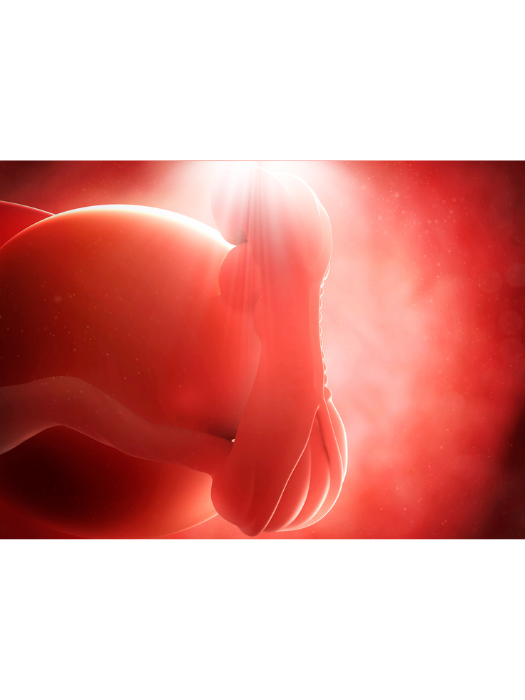
The membrane that surrounds and protects the fetus, once perforated, does not seal itself. This is the Achilles' heel of fetal surgery. Fibroin, with its rare combination of mechanical strength, biocompatibility, and programmable degradation, is emerging as a promising solution to fill this gap.
Fetal medicine lives with a paradox. The interventions that today make it possible to treat the fetus before birth—laser photocoagulation for twin-to-twin transfusion syndrome, fetoscopic tracheal occlusion for congenital diaphragmatic hernia, myelomeningocele repair, and the placement of shunts and valves—almost all require puncturing the amniochorionic membranes. Yet these membranes, unlike skin or nearly any other tissue in the body, possess no true regenerative capacity: the hole created by the fetoscope remains open. From this limitation arises the complication that has challenged fetal surgery for decades—iatrogenic preterm premature rupture of membranes (iPPROM)—and with it the risk of preterm birth, which can negate the very benefits of the intervention.
The wound that never heals
Fetal membranes are a thin and deceptively fragile structure consisting of the amnion, the innermost layer in direct contact with the amniotic fluid, and the chorion, fused to the maternal decidua. Their matrix is rich in collagen but poor in cells capable of repair, while their mechanical balance is governed by continuous remodeling in which matrix metalloproteinases—particularly MMP-2 and MMP-9—play a central role.
When a trocar passes through this tissue, the defect does not heal. Amniotic fluid leaks through the opening, the amnion tends to separate from the chorion, and this chorioamniotic separation is now considered one of the triggers of membrane rupture. The statistics underscore the severity of the problem. Depending on the procedure, iPPROM occurs in 6% to 45% of cases and may approach nearly 100% in the most invasive interventions for congenital diaphragmatic hernia. Because these procedures are generally performed during the second trimester, rupture occurs at early gestational ages, where every additional week of pregnancy has a profound impact on neonatal prognosis.
Sealants tested so far and their limitations
The history of attempts to close fetal membranes is a history of promising concepts colliding with the reality of the intra-amniotic environment. The amniopatch—an injection of maternal platelets combined with fibrin cryoprecipitate at the puncture site—was long considered the leading approach. However, the sudden activation of a large platelet mass has been associated in some cases with otherwise unexplained fetal death.
Dry collagen and gelatin plugs, and more recently a shape-memory lyophilized collagen plug capable of being compressed into a three-millimeter cannula and expanding to triple its diameter once deployed, demonstrated convincing ex vivo sealing performance but ultimately disappointed under real clinical conditions.
Biomimetic adhesives, including mussel-inspired glues and semi-rigid cyanoacrylate-coated patches tested in sheep and rabbit models, have confirmed an uncomfortable reality: the burst pressure of a sealed membrane remains far below that of an intact membrane, and applying an adhesive to a slippery tissue immersed in fluid is technically challenging.
The conclusion is clear: to date, no membrane-sealing strategy has successfully translated into clinical practice. This unmet need defines a demanding set of requirements—a material capable of adhering in a wet environment, mechanically compatible with native tissue, perfectly tolerated by the fetus, resorbable over the remaining duration of gestation, and deliverable through a thin fetoscope.
Why fibroin?
It is precisely against this backdrop that silk fibroin becomes particularly attractive. Extracted from the cocoon of Bombyx mori, it is one of the few natural polymers that combines outstanding mechanical strength and toughness with tunable elasticity. This rare combination enables it to withstand mechanical stress without crumbling or tearing at the edges.
Fibroin is also among the most biocompatible biomaterials known, eliciting only a limited immune and inflammatory response—a non-negotiable characteristic when the patient is a fetus.
Its greatest advantage, however, lies in its programmable degradation. By modulating the content of β-sheet structures—that is, the degree of crystallinity induced through mild water- or alcohol-based treatments—the resorption time can be adjusted from a few weeks to several months. In a setting where a device must remain functional until delivery and then disappear, the ability to tailor this degradation window is crucial.
Fibroin also offers exceptional versatility in form. It can be processed into films, porous sponges, hydrogels, electrospun nanofibers, and moldable plugs using entirely aqueous, room-temperature manufacturing methods gentle enough to preserve fragile bioactive molecules.
One final characteristic completes the picture: dense fibroin films act as impermeable barrier layers capable of preventing fluid leakage. This is precisely the function required of a fetal membrane patch.
From barrier to fetal patch
Translating these properties into a medical device suggests several complementary configurations.
The most immediate is a thin fibroin film functioning as an impermeable patch, placed over the defect to provide a seal with a level of mechanical robustness that collagen alone struggles to achieve.
Alongside this, a shape-memory lyophilized fibroin plug could be compressed within a delivery cannula and released at the target site to expand in situ—the same concept as the collagen plug, but benefiting from silk's superior mechanics and customizable degradation profile.
The challenge of adhesion in a wet environment can be addressed by coupling fibroin with mussel-inspired bioadhesive chemistries based on catechol groups, which retain strong adhesive performance even on moist surfaces.
Electrospun fibroin, with its extracellular matrix–mimicking nanoarchitecture, may serve not only as a barrier but also as a scaffold encouraging cellular repopulation.
In all these forms, the mechanical compliance of the patch can be engineered to closely match that of native fetal membranes, reducing stress concentrations at the edges that might otherwise propagate rather than contain tissue tears.
Not just sealing, but regenerating
The ultimate goal is not passive sealing but regeneration.
Here fibroin reveals a second identity: that of a tissue-engineering scaffold. Its role as a support matrix for amniotic epithelial cells and mesenchymal stem cell populations has been documented in skin and nerve regeneration contexts, where it provides a favorable microenvironment for cell adhesion and proliferation while degrading at a rate synchronized with new tissue formation.
This concept has inspired composite constructs combining fibroin with decellularized human amniotic membrane. In such systems, silk fibroin contributes mechanical strength and barrier function, while the amniotic matrix supplies its own bioactive repertoire of growth factors and anti-inflammatory and anti-fibrotic signals.
The objective thus shifts from a simple plug toward guided tissue repair, in which the device does not merely close a defect but re-establishes a living interface between the fetus and its environment.
Fibroin as shield and delivery platform
Viewed from another perspective, the challenge of fetal membranes is fundamentally a challenge of protection. The amnion is the envelope that safeguards the fetus, and repairing it means preserving the embryonic microenvironment as a whole.
Here, the gentle chemistry of fibroin opens an additional possibility: transforming the patch into a therapeutic reservoir. A silk film can locally release antibiotics—a critical feature, since intra-amniotic infection is both a cause and a consequence of membrane rupture and one of the principal drivers of preterm labor. It can also deliver anti-inflammatory or antioxidant agents capable of attenuating metalloproteinase-mediated remodeling.
The same principle could conceptually be extended to other fetal surgical applications in which delicate embryonic tissues require coverage and protection, such as patch-assisted myelomeningocele repair. In this setting, a well-tolerated, bioactive, and controllably degradable silk barrier is particularly attractive—while recognizing that such applications remain firmly within the experimental realm.
Future perspectives
At present, no clinically validated fibroin-based device exists for fetal membrane repair. Yet the convergence of properties that characterizes fibroin—excellent mechanical performance, programmable resorption, gentle processing that preserves bioactive molecules, and effective impermeable barrier behavior—makes it one of the most rational candidates for the next generation of fetal membrane sealants and, more ambitiously, regenerative patches for fetal medicine.
The trajectory is clear: from passive plugs to bioadhesive films, and ultimately to bioactive composites capable of both protection and regeneration.
For a silk-protein platform rooted in biomedical applications, fetal medicine represents a frontier where the same material logic that today reconstructs skin and other tissues may one day help protect life at its most fragile beginning.
