
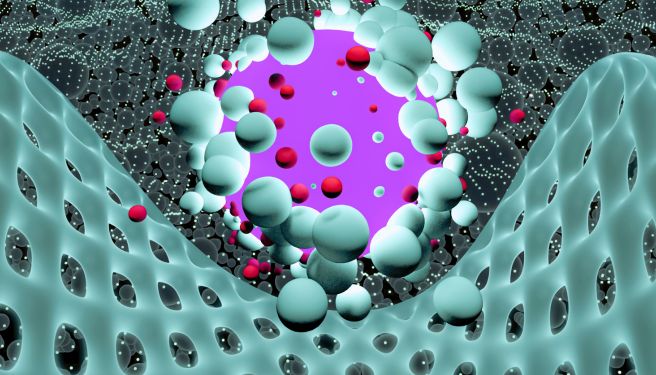
In the field of biomaterials engineering, silk fibroin is currently one of the most promising materials for the development of next-generation energy devices, particularly in the area of biological batteries and flexible supercapacitors. Its relevance derives not only from its biocompatibility and biodegradability, but above all from its extraordinary molecular architecture, which makes it an ideal functional matrix for advanced electrochemical applications.
From a structural perspective, it is a fibrillar protein characterized by highly ordered β-sheet domains, alternating with less crystalline and more amorphous regions. This organization gives the material a particularly favorable balance of mechanical strength, flexibility, and chemical stability. In the energy sector, these properties enable the fabrication of thin, foldable, and conformable substrates, which are essential for wearable, implantable, and transient electronic devices. Moreover, the protein matrix offers numerous chemically modifiable sites, making it possible to integrate conductive nanomaterials, redox-active polymers, and functional ionic species.
Engineering fibroin for biofunctional electrodes
For fibroin to operate effectively as a component of a biological battery or a supercapacitor, it is necessary to employ bioengineering techniques that enhance its electrical conductivity and charge storage capacity. In its native form, fibroin is essentially an electrical insulator. The technological breakthrough occurs through the formation of hybrid composites in which the protein acts as a structural scaffold and support matrix for electroactive materials. The most widely used strategies involve the incorporation of graphene, carbon nanotubes, MXenes, nanostructured metal oxides, or conductive polymers such as polyaniline and PEDOT:PSS.
Thanks to its porous three-dimensional network, fibroin promotes a homogeneous distribution of nanoparticles and improves the mechanical stability of the electrode during charge and discharge cycles. This aspect is crucial in flexible devices, where repeated deformation can compromise electrochemical performance. From a surface engineering perspective, the functional groups present in the amino acid side chains enable crosslinking processes, ionic doping, and immobilization of redox species, thereby increasing the charge density that can be stored.
Fibroin in biological batteries
In the context of biological batteries, fibroin is mainly used as a separator membrane, a bio-based solid electrolyte, and a support for enzymatic bioelectrodes. Biological batteries exploit biochemical or bioelectrochemical processes, often based on enzymes or organic molecules, to convert chemical energy into electrical energy. In this scenario, fibroin represents an ideal material for constructing selective membranes capable of allowing ionic transport while simultaneously maintaining mechanical integrity and biological compatibility.
A particularly interesting field is that of implantable bio-batteries, designed to power biosensors, microactuators, or temporary medical devices. Here, fibroin offers a decisive advantage: it can be engineered to degrade in a controlled manner within the body, eliminating the need for surgical removal. From a technical standpoint, modulation of the crystallinity degree of the β-sheet domains allows control over both the degradation rate and ionic diffusion, which are fundamental parameters in designing the operational lifetime of the device.
Fibroin-based flexible supercapacitors
It is in the field of flexible supercapacitors that fibroin is showing particularly advanced results. Unlike conventional batteries, supercapacitors store energy mainly through electrostatic or pseudocapacitive accumulation at the electrode–electrolyte interfaces. This requires materials with a high specific surface area, rapid ionic mobility, and excellent cycling stability.
When appropriately processed into nanoporous films, aerogels, or electrospun nanofibers, fibroin provides an excellent microstructure for maximizing the available active area. When combined with carbon-based materials or redox-active oxides, it enables the fabrication of ultralight, deformable, and high-performance electrodes. From a biomechanical standpoint, these devices maintain functional capacity even under bending, twisting, and stretching conditions, a characteristic essential for integration into smart textiles, epidermal patches, and wearable devices. The protein–nanomaterial interface also plays an important role in dissipating mechanical stress, reducing the risk of fracture in the electrode film.
Performance aspects and engineering challenges
The performance of fibroin-based devices strongly depends on the quality of composite engineering. Key parameters include specific capacitance, energy density, power density, cycling retention, and mechanical stability under deformation. The main challenge lies in overcoming the limited intrinsic conductivity of the protein matrix without compromising its biological properties. In industrial applications, this means finding the correct balance between conductive phase content and preservation of the biomaterial’s flexibility.
A second technical issue concerns reproducibility on a manufacturing scale. The structure of fibroin is extremely sensitive to extraction processes, solution regeneration, and thermal or solvent-induced treatments, factors that directly influence the final morphology and, consequently, the electrochemical performance.
Application prospects in future devices
The most interesting perspective is the use of fibroin as an energy biomaterial in electronic systems integrated with the human body. Examples include intelligent diagnostic patches, continuous biosensors, controlled drug delivery devices, or biodegradable transient systems for post-operative monitoring. In such a context, this protein is not merely a support material, but a true multifunctional platform capable of combining energy storage, biocompatibility, and mechanical integration with biological tissues.
