
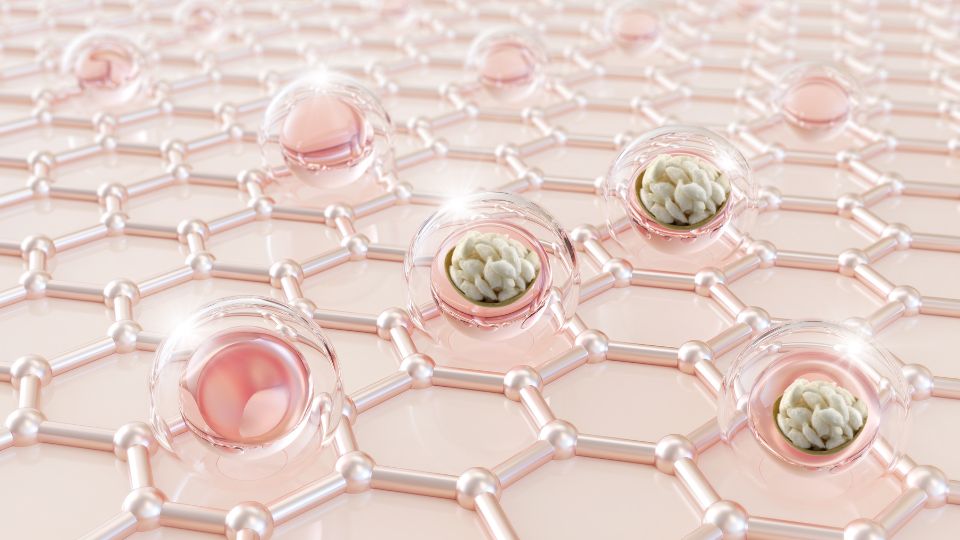
In the context of cutaneous drug delivery, sericin can be regarded as a functional matrix rather than a simple excipient. Its protein conformation, characterized by a sequence rich in polar amino acids alternating with less polar domains, allows it to adapt to different cutaneous microenvironments. This structural versatility promotes adhesion to the stratum corneum and the formation of a biomimetic film capable of maintaining prolonged contact with the skin surface. The result is an increase in the residence time of the delivery system on the skin, a crucial factor for improving transdermal penetration efficiency compared with traditional carriers, which are often limited by rapid evaporation or surface instability.
Mechanisms for overcoming the skin barrier
The skin barrier represents the main obstacle to transdermal administration, especially for molecules that do not meet the ideal requirements of lipophilicity and low molecular weight. Sericin acts through a combined mechanism of physical interaction and functional modulation of the stratum corneum. Its ability to bind water increases local hydration, inducing a temporary increase in intercellular lipid fluidity. In parallel, non-covalent interactions with epidermal lipids help reduce the structural order of lipid lamellae, facilitating the diffusion of active compounds without compromising barrier integrity. This approach is particularly relevant because it does not rely on aggressive or occlusive mechanisms, but on a reversible and physiologically compatible modulation.
Synergistic transport of lipophilic and hydrophilic molecules
One of the limitations of conventional delivery systems is the need to choose different formulations depending on the chemical nature of the active ingredient. Sericin, instead, provides a multiphasic environment capable of interacting with both lipophilic and hydrophilic molecules within the same system. Lipophilic compounds can associate with the less polar regions of the protein structure, while hydrophilic ones are stabilized by the numerous exposed polar functional groups. This molecular organization reduces precipitation phenomena or phase separation and enables more uniform transport across the different skin layers. From an application standpoint, this makes it possible to develop complex formulations in which multiple actives with complementary functions simultaneously reach the site of action.
Stability, bioavailability, and controlled release
During transdermal passage, many active ingredients are subject to chemical degradation or loss of efficacy due to unfavorable interactions with the cutaneous environment. Sericin plays a protective role by creating a stabilizing microenvironment that limits exposure of actives to degradative factors such as oxygen, pH variations, or surface enzymes. Once the epidermal barrier is crossed, the release of active ingredients occurs progressively, driven by local tissue conditions. This gradual release promotes greater local bioavailability and a more homogeneous distribution within the dermis, reducing concentration peaks and potential adverse effects associated with overly rapid absorption.
Applicative implications and future perspectives
The use of sericin as an enhanced transdermal vector represents a significant evolution compared with traditional cutaneous delivery systems. Its characteristics of biological compatibility, molecular versatility, and deep transport capability make it particularly attractive for pharmacological, dermocosmetic, and biomedical applications. Future perspectives focus on optimizing sericin purification and functionalization processes in order to obtain increasingly reproducible and targeted systems. In this scenario, sericin is not seen as a universal solution, but as a modulable platform that can be adapted to specific therapeutic needs, minimizing the structural and functional limitations of conventional carriers.
