
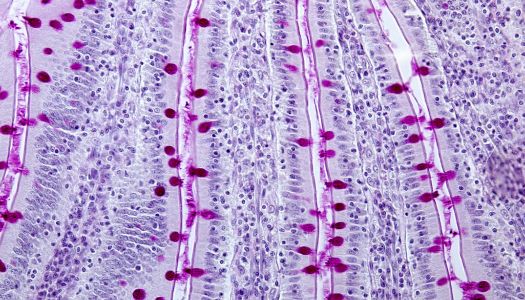
Chronic inflammatory bowel diseases, such as Crohn’s disease and ulcerative colitis, are conditions characterized by persistent inflammation of the intestinal mucosa, often associated with structural damage to the epithelium, impairment of the intestinal barrier, and reduced regenerative capacity of the tissues. In recent years, biomedical research has focused not only on controlling inflammation but also on intestinal mucosal regeneration as a strategic therapeutic objective. The intestinal mucosa is a highly specialized biological barrier responsible for nutrient absorption, immune protection, and maintenance of microbiota homeostasis. When this barrier is damaged, intestinal permeability increases, triggering an inflammatory vicious cycle that promotes disease progression.
Fibroin membranes can be engineered with different mechanical properties and porosity levels, allowing them to adapt to the specific requirements of regenerating tissues. In the intestinal field, these membranes are designed to mimic the architecture of the natural extracellular matrix, creating a microenvironment that supports the repair of damaged intestinal epithelium. Several experimental studies have shown that fibroin promotes intestinal epithelial cell migration, the formation of new cellular junctions, and the reduction of local oxidative stress. In addition, some preclinical models suggest that this biomaterial may indirectly modulate the immune response by limiting the production of pro-inflammatory cytokines.
Fibroin membranes and intestinal mucosal healing
One of the most promising aspects of fibroin membranes is their ability to accelerate mucosal healing. In inflammatory bowel diseases, the physiological repair process is often inefficient because of chronic inflammation and the continuous exposure of the mucosa to bacteria, digestive enzymes, and immune mediators. Bioengineered membranes act as biological scaffolds, namely temporary support structures that facilitate cellular regeneration. Once applied to the damaged surface, they can promote the proliferation of intestinal stem cells and support epithelial reconstruction.
Some studies have also demonstrated that fibroin can be combined with bioactive molecules, growth factors, or therapeutic nanoparticles to create controlled drug delivery systems. This approach allows anti-inflammatory agents to be delivered directly to the site of injury, improving therapeutic efficacy while reducing systemic side effects. From a clinical perspective, the concept of “mucosal healing” is now considered one of the most important indicators of deep remission in inflammatory bowel diseases. Fibroin-based technologies may therefore contribute to improving long-term patient outcomes.
Experimental studies on intestinal fibroin
The currently available scientific literature shows encouraging results, particularly in the preclinical field. Studies conducted on animal models of experimental colitis have demonstrated a significant reduction in inflammatory infiltrates and improved reconstruction of the epithelial barrier in tissues treated with fibroin membranes. Histological analyses have shown enhanced organization of intestinal crypts and reduced mucosal ulceration. At the same time, tissue engineering studies have observed increased expression of proteins involved in tight junctions, which are essential for maintaining intestinal barrier integrity.
Another extensively studied aspect concerns fibroin’s ability to support the viability of intestinal stem cells. Effective epithelial regeneration depends on the proper function of the cells located within the crypts of Lieberkühn, which represent the regenerative compartment of the intestine. Although the results are promising, most evidence still derives from experimental studies and preliminary trials. Further controlled clinical studies are required to define safety, application methods, and actual therapeutic efficacy in humans.
Applications of fibroin membranes in IBD
Future perspectives for fibroin membranes in inflammatory bowel diseases (IBD) appear highly significant. Beyond their regenerative support function, new smart biomaterials may integrate antibacterial, immunomodulatory, and advanced drug delivery properties. The combination of fibroin, mesenchymal stem cells, and regenerative biofactors represents one of the most dynamic research areas in intestinal regenerative medicine. In the future, personalized membranes may be developed to adapt to the specific biological characteristics of each patient.
Three-dimensional bioprinting technologies are also opening innovative scenarios. The 3D printing of fibroin-based intestinal scaffolds could enable the creation of increasingly sophisticated biomimetic tissues for both therapeutic applications and pharmacological research. The growing interest in less invasive and more targeted therapeutic approaches makes fibroin an attractive candidate for the treatment of chronic intestinal diseases.
