
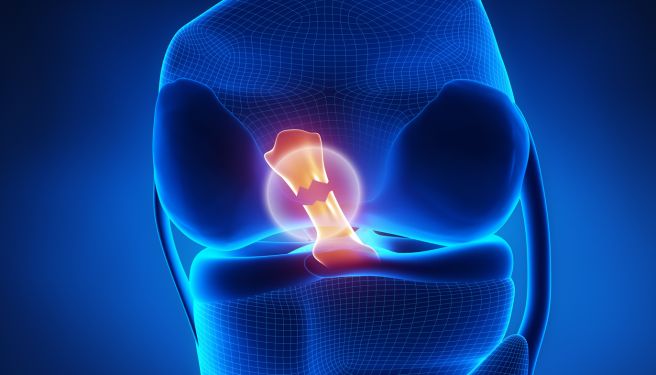
The unresolved problem of ACL reconstruction
Anterior cruciate ligament (ACL) rupture remains one of the most frequent and clinically demanding musculoskeletal injuries, with an estimated incidence of approximately 200,000 reconstructive procedures per year in the United States alone. The current surgical gold standard, based on autografts harvested from the patellar tendon or the semitendinosus and gracilis tendons, is burdened by donor site morbidity, variability in long-term functional outcomes, and a ligamentization process that requires between 12 and 24 months to complete. Allografts, while eliminating the donor morbidity issue, introduce immunological risks and pathogen transmission concerns, and show higher failure rates than autografts in young, physically active patients. First- and second-generation synthetic prostheses — Dacron, Gore-Tex, LARS — have provided immediate mechanical stability, but at the cost of foreign body reactions, abrasive wear and a complete absence of biological integration, resulting in medium-term failures well documented in the literature. Against this backdrop, nanotechnology-based matrices derived from silk fibroin and produced by electrospinning are emerging as one of the most scientifically robust proposals in the field of ligament tissue engineering.
Nanofibrous architecture and mimicry of the native extracellular matrix
The native ACL is a complex hierarchical structure: bundles of type I collagen fibers oriented along the mechanical load axis, with diameters ranging from 50 to 500 nm at fibril level, gathered into fascicles that display the unmistakable sinusoidal crimp pattern visible under longitudinal SEM imaging and histology. This organization confers the nonlinear mechanical behavior typical of ligaments: a toe region, in which the undulated fibers progressively straighten, followed by a linear zone of high stiffness. Reproducing this structural hierarchy with an artificial material has for years represented an unsolved challenge.
Electrospinning makes it possible to deposit polymeric fibers with diameters in the nanometer range by applying a high-voltage electric field to a polymer solution. In the case of fibroin, varying the solution concentration (typically between 6 and 16% w/v in formic acid or HFIP), the applied voltage (15–25 kV), the needle-to-collector distance and the rotational speed of the rotating collector allows fine control of both fiber diameter — which in recent literature ranges from 200 nm to 2 µm — and the degree of fiber alignment. This ability to induce preferential fiber orientation is critical for the ligament application, because electrospun constructs with aligned fibers exhibit anisotropic mechanical properties comparable to those of native tissue in the primary load direction, a behavior impossible to achieve with random-fiber scaffolds.
Mechanical properties of electrospun matrices and comparison with native tissue
The adult human ACL exhibits a maximum tensile strength of approximately 2,160 N and a structural stiffness of 242 N/mm — values that single electrospun scaffolds made of pure fibroin alone cannot yet match. However, research over recent years has developed composite strategies that allow significant approximation of these targets.
Purified fibroin scaffolds fabricated using embroidery technology have achieved a maximum force at break of approximately 684 N in uniaxial tensile testing, simultaneously supporting cell adhesion without cytotoxicity, with the highest fibroblast adherence and pronounced paxillin expression in purified constructs. Even more relevant results emerge from the SF-KSBC (Silk Fibroin Knitted Sheath with Braided Core) hierarchical textile structure: tensile mechanical tests on this construct demonstrated a maximum load of 1,212.4 ± 56.4 N under hydrated conditions, confirming the scaffold's suitability for ACL reconstruction, with the absence of cytotoxic substances verified in vitro on L929 fibroblasts.
Regarding the mechanical properties linked to β-sheet crystallinity — the dominant structural conformation in fibroin that acts as a physical cross-link and mechanical reinforcement site — the content of secondary crystalline β-sheet structures, modified during fibroin processing, exerts a profound influence on mechanical properties and degradation rate, functioning as a reinforcing filler and physical cross-linking site. Post-electrospinning ethanol treatment induces a conformational transition toward the β-sheet structure, mechanically stabilizing the fibers and reducing the rate of enzymatic hydrolysis in vivo.
In composite systems, combination with PCL (polycaprolactone) has demonstrated a synergistic improvement: aligned PCL/fibroin scaffolds show, by qRT-PCR analysis, upregulated gene expression of tendon and ligament marker proteins including type I collagen, fibronectin and biglycan, with cells aligning in the direction of fiber axes, confirmed by SEM and cytoskeleton staining.
Cellular response and biological ligamentization
The ability of a scaffold to guide cellular differentiation toward the ligamentous fibroblastic phenotype is critical for the long-term success of the implant. ACL fibroblasts, tenocytes and mesenchymal stem cells respond distinctly to biochemical and topographical signals provided by the electrospun matrix.
Experiments with rabbit dermal fibroblasts on aligned PCL/fibroin scaffolds indicated that silk fibroin promotes cell proliferation to a greater extent than fiber alignment alone, with biomechanical testing showing that tensile stiffness and maximum load of cell-seeded scaffolds reached 60.2% and 81.3% of normal tendon values respectively, significantly higher than acellular scaffolds. These data indicate that the protein component of fibroin provides biochemical signals — including RGD (Arg-Gly-Asp) sequences that facilitate cell adhesion, migration and proliferation — which synergize with the topographic signal of alignment to orient ECM deposition in the load direction.
Pivotal in this context is the production of type I collagen, the main structural component of the mature ACL. Studies on aligned PCL nanofiber scaffolds in animal tendon repair models have shown that fiber bundle constructs promote in vivo repair by inducing neo-collagen organization and orientation. In the specific context of fibroin, the inflammatory response is contained due to the low immunogenicity of the material, an advantage over synthetic polymers that tend to generate prolonged macrophage responses.
Histological studies on silk fibroin textile prostheses implanted in sheep revealed the formation of fibrovascular tissue around the scaffold, with a progressive attempt at ligamentous-like tissue formation at 6 months, albeit associated with higher articular damage scores compared to the autograft group. This finding suggests that both formulation and geometric architecture of the scaffold profoundly influence the in vivo biological response, and that the chemical biocompatibility of fibroin alone is insufficient unless accompanied by biomechanical optimization of the construct.
Bone integration and the challenge of the enthesis
One of the most technically complex aspects of ACL reconstruction concerns the ligament-bone interface (enthesis), a gradient structure that transitions from fibrous soft tissue through mineralized fibrocartilage to subchondral bone, with progressive variations in composition and mechanical properties on a millimeter scale. No artificial material has yet faithfully replicated this gradient transition.
Research has, however, produced promising bioinspired approaches. Composite tubular grafts made of horseradish peroxidase cross-linked silk fibroin containing ZnSr-doped β-tricalcium phosphate particles showed superior tensile modulus (12.05 ± 1.03 MPa) compared to controls lacking the inorganic phase (5.30 ± 0.93 MPa), with SaOs-2 cells that adhered, proliferated and demonstrated osteogenic activity in terms of alkaline phosphatase production and expression of osteogenic markers. These results configure a hybrid system capable of simultaneously guiding ligament regeneration in the central zone and osseointegration in the bone anchoring regions, reducing the maturation time of the interface and potentially lowering the risk of pull-out failure during early remodeling phases.
Studies on ligament-bone interface formation in silk-based scaffolds have documented progressive bone integration in the femoral and tibial tunnels, with tissue maturation reflecting a biologically coherent pathway consistent with natural ligamentization.
Electrospinning parameters and structural optimization
The translation from laboratory scale to scalable production requires a precise understanding of the relationship between process parameters and the final properties of the scaffold. Fibroin solution concentration is the parameter that exerts the greatest control over fiber diameter: dilute solutions (6–8% w/v) produce thinner fibers with greater specific surface area, favorable for initial cell adhesion but mechanically weaker; higher concentrations (12–16% w/v) produce thicker fibers with greater tensile strength but reduced porosity, negatively impacting cell penetration into the inner zones of the scaffold.
Collector rotational speed is the critical parameter for degree of alignment: above 2,000 rpm a progressive transition from random to highly aligned fibers is observed. Alignment not only improves mechanical properties in the load direction, but also provides topographical guidance (contact guidance) that orients fibroblasts and promotes parallel collagen deposition, mimicking the native ACL organization.
Post-treatment with methanol vapors or 70–90% ethanol baths induces β-sheet crystallization, reducing fiber solubility and significantly increasing mechanical stability in aqueous environments — an indispensable condition for an intra-articular implant exposed to synovial fluid. Ethanol treatment induces a marked β-sheet transition in fibroin, confirmed by FTIR and Raman spectroscopy, with consequent improvement in thermal stability, mechanical strength and dimensional stability of the scaffold.
Fibroin-PCL composite systems and open challenges
Pure fibroin presents some intrinsic limitations that restrict its applicability: brittleness under high tensile strain and a degree of variability in mechanical properties related to the biological source of the material. Combination with PCL, a biocompatible and biodegradable synthetic polymer with favorable viscoelastic properties, has proven to be an effective strategy for bridging these gaps. Pure electrospun PCL shows intrinsic hydrophobicity and lack of cell adhesion recognition sites that limit its biomedical application, while pure fibroin has poor mechanical properties and ductility, making the PCL/fibroin composite system the most balanced solution for ligament tissue engineering.
A further composite system of emerging interest is the fibroin/fibrin pairing: composite SF/fibrin scaffolds obtained by electrospinning show smooth and uniform fiber structures with relatively small diameters, with increased mechanical strength compared to pure fibrin, excellent hemocompatibility and appropriate degradation rates, with the SF/fibrin 25:75 scaffold increasing the proliferation and adhesion of mesenchymal stem cells.
Significant challenges nonetheless remain that current literature has not yet satisfactorily resolved. The lack of intrinsic vascularization within the scaffold represents a limit to cell survival in the central zones of thicker constructs. Integration of microfluidic channels or co-electrospinning of sacrificial fibers to create interconnected pore networks are approaches currently under exploration. Sterilization of scaffolds — necessary for clinical translation — can alter the mechanical properties and crystalline structure of fibroin, requiring optimized sterilization protocols such as low-dose gamma irradiation or ethylene oxide sterilization. Finally, standardization of production processes and inter-batch reproducibility remain critical aspects for regulatory validation.
Clinical research status and translational perspectives
A clinical trial (NCT00490594) is currently underway evaluating the SeriACL® device (AbbVie, Chicago, IL, USA) made of knitted silk for ACL replacement and knee joint stabilization after surgery, with promising preliminary results. This represents to date the primary regulatory reference for fibroin-based devices in the ligament field.
Progression toward structurally more sophisticated electrospun scaffolds is following a trajectory aimed at multilayer constructs — a highly aligned central zone for axial mechanical resistance, a surface zone with greater porosity and random orientation for synovial integration — potentially loaded with growth factors (TGF-β1, PDGF-BB, bFGF) to accelerate the ligamentization phase. The paradigm of ACL tissue engineering is shifting from a purely mechanistic approach toward a biologically active one, in which the electrospun matrix functions as an intelligent microenvironment capable of orchestrating the regenerative response of the host organism on timescales compatible with surgical rehabilitation.
