
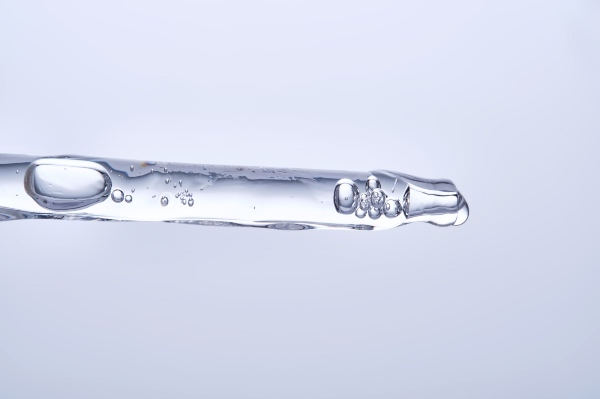
The hypodermic syringe has crossed almost two centuries without any substantial conceptual change: a hollow needle that passes through the dermis and deposits the antigen in the muscle, with the whole train of pain, dedicated medical staff, cold chain and needle anxiety that this entails. The paradox of this model is that muscle, the anatomical target of most vaccinations, is immunologically poor tissue: sparse in antigen-presenting cells, distant from the sentinels that trigger the adaptive response. The skin, by contrast, is densely populated with dendritic cells and Langerhans cells, and yet it is crossed and ignored. It is from this asymmetry that the interest in micrometric intradermal delivery arises, and fibroin has established itself as the material that makes this transition not only possible but clinically sustainable.
The geometry that dissociates penetration from pain
The premise of every microneedle system is biophysical before it is pharmacological. The stratum corneum, the barrier of anucleate keratinocytes that defends the epidermis, has a thickness of the order of ten to twenty micrometres and is devoid of nerve endings and blood vessels. The nociceptors and capillaries lie deeper, in the reticular dermis. A needle that pierces the corneum and stops in the upper epidermis or the papillary dermis, with a length ranging from a few hundred micrometres to a millimetre, therefore penetrates below the activation threshold of the pain receptors. What the subject perceives is not a puncture but a light pressure, often indistinguishable from contact with a rough surface.
Fibroin makes it possible to respect this dimensional window without sacrificing mechanical strength. In the dried format, with adequate control of β-sheet crystallinity, the protein reaches an elastic modulus and a compressive strength sufficient to overcome the viscoelastic component of the corneum before the tip bends or breaks. It is this combination — a tip rigid enough to penetrate, short enough not to wake the nociceptors — that makes painlessness a design property rather than a fortunate side effect.
Why fibroin, and not just any polymer
Microneedles have historically split into two families that are difficult to reconcile. On one side the dissolving systems, in which the microneedle material dissolves in the interstitial fluid, releasing its load but imposing, in order to do so, water-soluble polymers that are often poorly compatible with the stability of biological actives. On the other side the coated microneedles on insoluble supports, mechanically robust but with a loading capacity limited to the surface of the coating. Fibroin occupies an intermediate territory that neither of these approaches covers on its own.
The entirely aqueous processing allows the antigen to be formulated under mild conditions, without organic solvents or temperatures that would denature the immunogenic component. The controlled transition from an amorphous to a crystalline structure — the shift towards β-sheets induced physically, without chemical crosslinkers — makes it possible to tune the solubility of the finished material along a continuum: from matrices that dissolve in minutes to insoluble tips that erode over the course of days. And it is precisely the capacity of fibroin to stabilise biological macromolecules in the dry state, reducing their conformational mobility and protecting them from thermal degradation, that turns the microneedle from a mere mechanical carrier into a reservoir for preservation. This property, which in the context of scaffolds and coatings we know well as thermal stabilisation, here becomes the key that decouples the vaccine from the cold chain.
The skin as an immune organ and the logic of dose sparing
The immunological argument in favour of the intradermal route predates microneedles by decades, but only with the latter does it become clinically practicable without the operator-dependent variability of the Mantoux technique. By depositing the antigen directly into the epidermis and the superficial dermis, the microneedle delivers it within reach of the Langerhans cells and dermal dendritic cells, which take it up, migrate towards the draining lymph nodes and trigger the expansion of T lymphocytes and the formation of germinal centres. Presenting the antigen to a compartment so rich in professional cells means being able to obtain equivalent antibody titres with quantities of antigen lower than those required by the intramuscular route: the so-called dose-sparing effect, decisive in pandemic scenarios in which antigen manufacturing capacity is the bottleneck.
Sustained release and infection mimicry
The most recent generation of fibroin microneedles adds a temporal dimension to this spatial advantage. Traditional injection releases the entire dose in an instantaneous bolus, a profile that has little to do with the kinetics of a natural infection, during which the antigen accumulates progressively over the course of days. Several studies on germinal centre biology have shown that prolonged antigen availability during the priming phase amplifies and extends the response, with larger germinal centres and greater activity of follicular helper T lymphocytes than the conventional bolus.
Fibroin, thanks to its slow and programmable erosion, is the ideal material for engineering this profile. Insoluble fibroin tips loaded with the antigen, once implanted in the skin, degrade gradually and release their load over a ten- to fourteen-day window that reproduces the kinetics of an infection — hence the expression infection mimicry. The subject applies the patch, holds it in place for a few minutes so that the soluble base dissolves and deposits the tips in the dermis, then removes the support: from that moment the vaccination proceeds autonomously beneath the skin, with no residual device on the surface.
The multi-antigen proof of concept
The preclinical trajectory of fibroin as a vaccine platform was built by demonstrating that the material is not tied to a single target. The founding studies produced immunisation in murine models against antigens heterogeneous in nature and complexity — influenza, Clostridium difficile, Shigella — establishing that fibroin acts as a cross-cutting delivery system and not as an ad hoc solution for a single vaccine. In parallel, the stabilising capacity was verified in formats other than the microneedle: thin fibroin films used as a dry format for the thermal stabilisation of inactivated polio vaccine showed that the antigen can retain integrity and potency outside the cold chain, a result with direct implications for the logistics of vaccination campaigns in resource-limited settings.
The extension towards more demanding antigens then broadened the applicative scope. Slow-delivery immunisation studies showed that prolonged antigen availability enhances the neutralising antibody response and the germinal centre reaction even for notoriously difficult targets such as HIV, confirming that the kinetic advantage observed with influenza is a general principle and not a peculiarity of the influenza antigen. It is on this multi-antigen preclinical basis, and not on a single isolated success, that the platform's credibility for the clinical transition was built.
What the human data show
The transition from mouse to human took concrete form with the MIMIX platform of Vaxess Technologies, a microneedle patch whose insoluble fibroin tips — arranged in an eleven-by-eleven array — rest on polymer bases that dissolve on contact with skin moisture, depositing the tips in the dermis after an application time of less than five minutes. The first phase 1 study in humans, conducted in Canada under the code VX-103, administered an H1N1 influenza vaccine to forty-five healthy adults randomised between two dosages — fifteen and seven and a half micrograms — and placebo, on the volar forearm, with a follow-up of approximately one hundred and eighty days.
The results met the serological criteria required by the EMA and the FDA for seasonal influenza vaccines: the group mean fold rises in haemagglutination inhibition titres fell between eight point seven and twelve-fold, with seroconversion rates above seventy-six per cent and seroprotection rates over ninety-two per cent in both dose groups. Tolerability was favourable: local reactions were largely limited to transient erythema and hyperpigmentation, with rare manifestations of moderate grade and a notably low frequency of systemic symptoms, in line with or lower than what has been observed with other microneedle platforms. It is a profile which, even with the caution imposed by a phase 1 sample size, indicates that the principle demonstrated in rodents — a robust response with contained reactogenicity — holds up in the transition to humans.
Thermostability, self-administration and vaccine equity
The clinical value of these data does not end with the antibody titre. The operating model that fibroin enables overturns the entire logistics of vaccination: a thermostable patch, mailable to the home, applicable by the subject alone without a healthcare operator and without refrigeration. The stabilisation of the antigen in the dry protein matrix is precisely what makes it possible to dispense with the cold chain, the item of cost and complexity that weighs most heavily on vaccination campaigns in peripheral territories and low-income countries. From an equity standpoint, a vaccine that requires neither a refrigerator nor a clinic nor staff trained in injection redraws the map of accessibility, shifting vaccination from the healthcare facility to the kitchen at home.
The fibroin microneedle is no longer a promise confined to the bench. The principle of painlessness is established on the biophysical level, the immunological advantage of the intradermal route has a solid experimental basis, infection mimicry is confirmed by germinal centre biology, and the phase 1 data demonstrate that an antibody response compliant with regulatory criteria is achievable in humans with contained reactogenicity. What separates this technology from routine clinical use today is not so much a question of plausibility as one of scale: manufacturing, loading capacity, the economic sustainability of the programmes. These are engineering and industrial obstacles, not conceptual ones — and for a platform that rests on a biomaterial whose safety and versatility we now know in depth, they are exactly the kind of obstacles that time and investment tend to resolve.
